00.0 | The Zero Issue
Winter '25 | Repose
The once-in-ever digital copy of The Table available free online 24-7-365.
Check it out and get the inside scoop on how the Zero Issue came to be by reading to the bottom.
Thanks for being here.
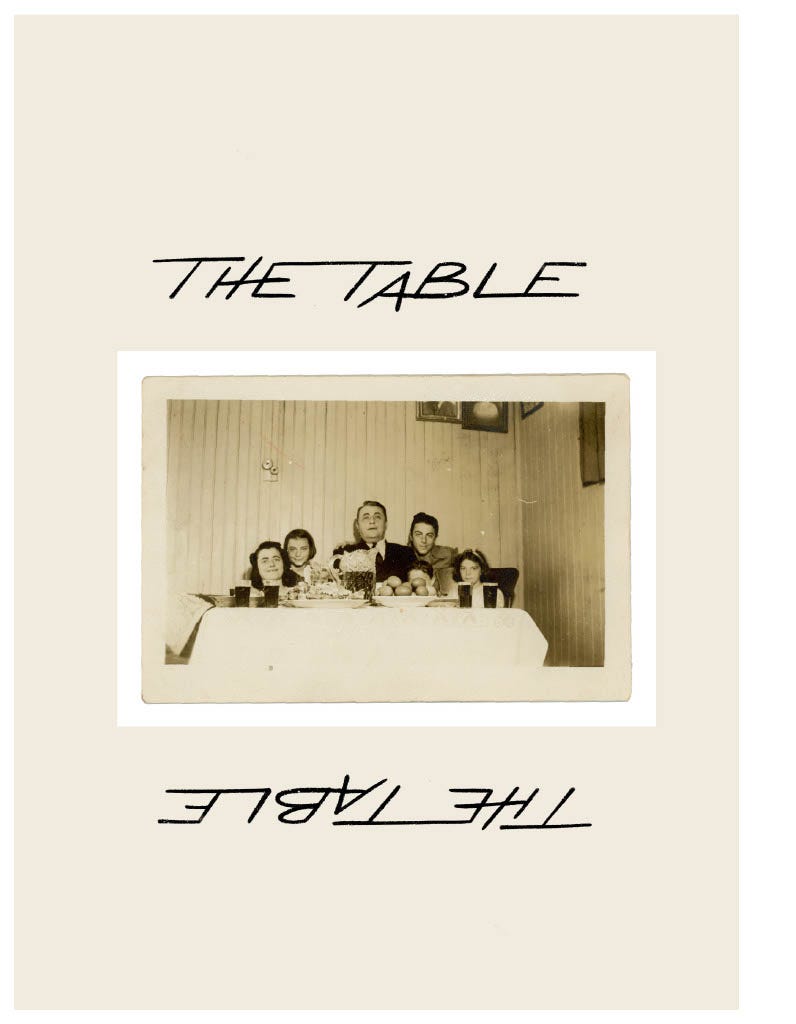
++ Want the story behind the cover? Read it here.
++ Click on each image to see the full spread.


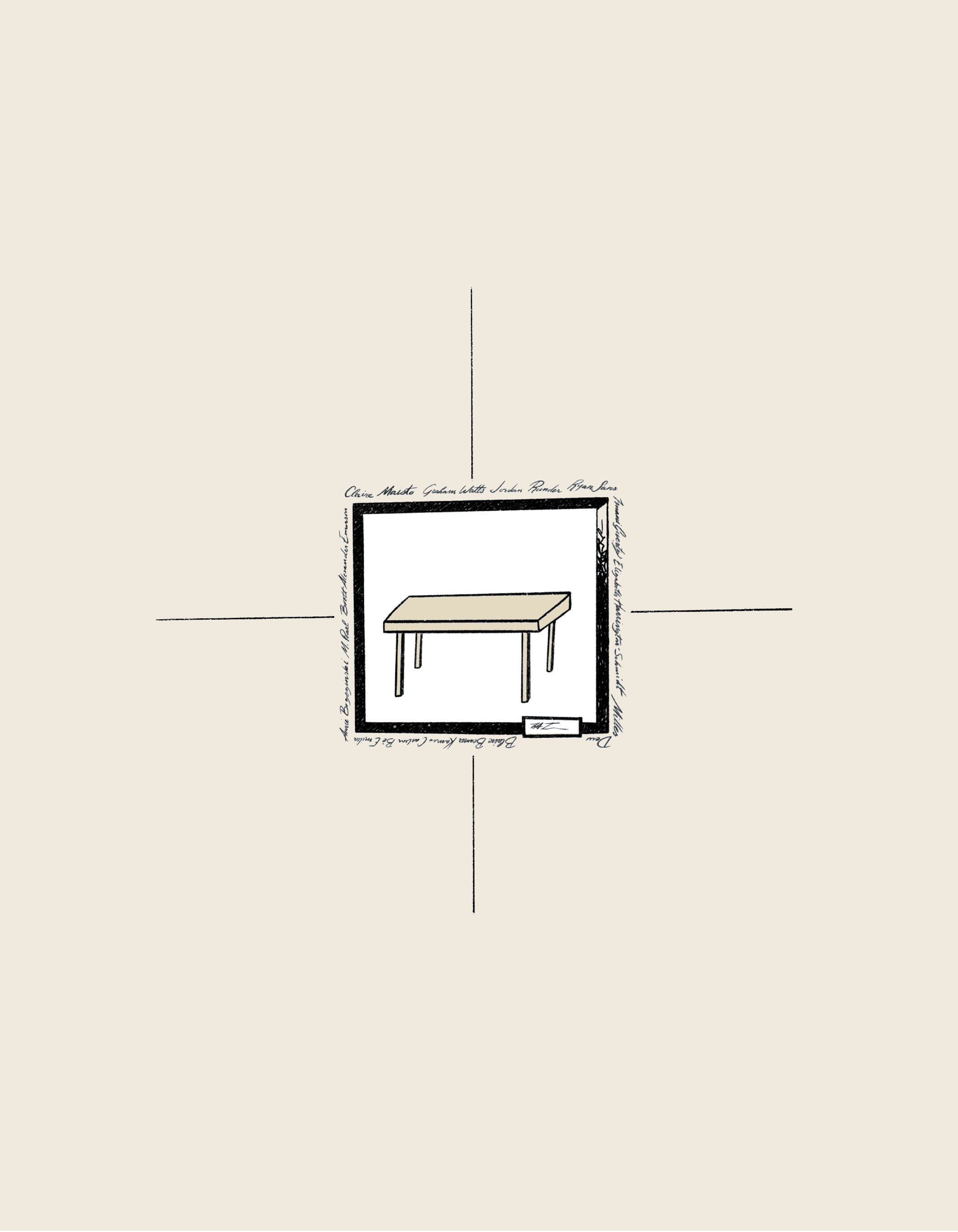
How We Got Here | The “Zero Issue” Origin Story
When the idea for The Table first came up, it already felt real. But I had no idea what it would look like, if anyone would be interested in contributing, or who would care once it was made.
I’ve led hundreds of editorial projects — but I was a complete novice when it came to design. I knew if I was going to see what this looked like in practice, I needed to start small, and I needed to start now.
Starting With Structure
In order to make something replicable, it helps to consider questions that will come up every time and create frameworks that hand you the answers.
My questions (and the frameworks I landed on to solve them) looked like this:
How do you create something that feels familiar even when it changes? (Use what a traditional newspaper does best. Let contributors “claim a column and run with it.”)
How do you make sure the pacing is sustainable and doesn’t require extra decision-making? (Run quarterly — publish two weeks after each solstice and equinox.)
How do you create coherence across each issue without A) needing novel themes or B) falling into the trap of hyper-seasonality? (Establish your own themes that address each season at a higher level: Winter | Repose; Spring | Return; Summer | Revelry; Fall | Reaping.)
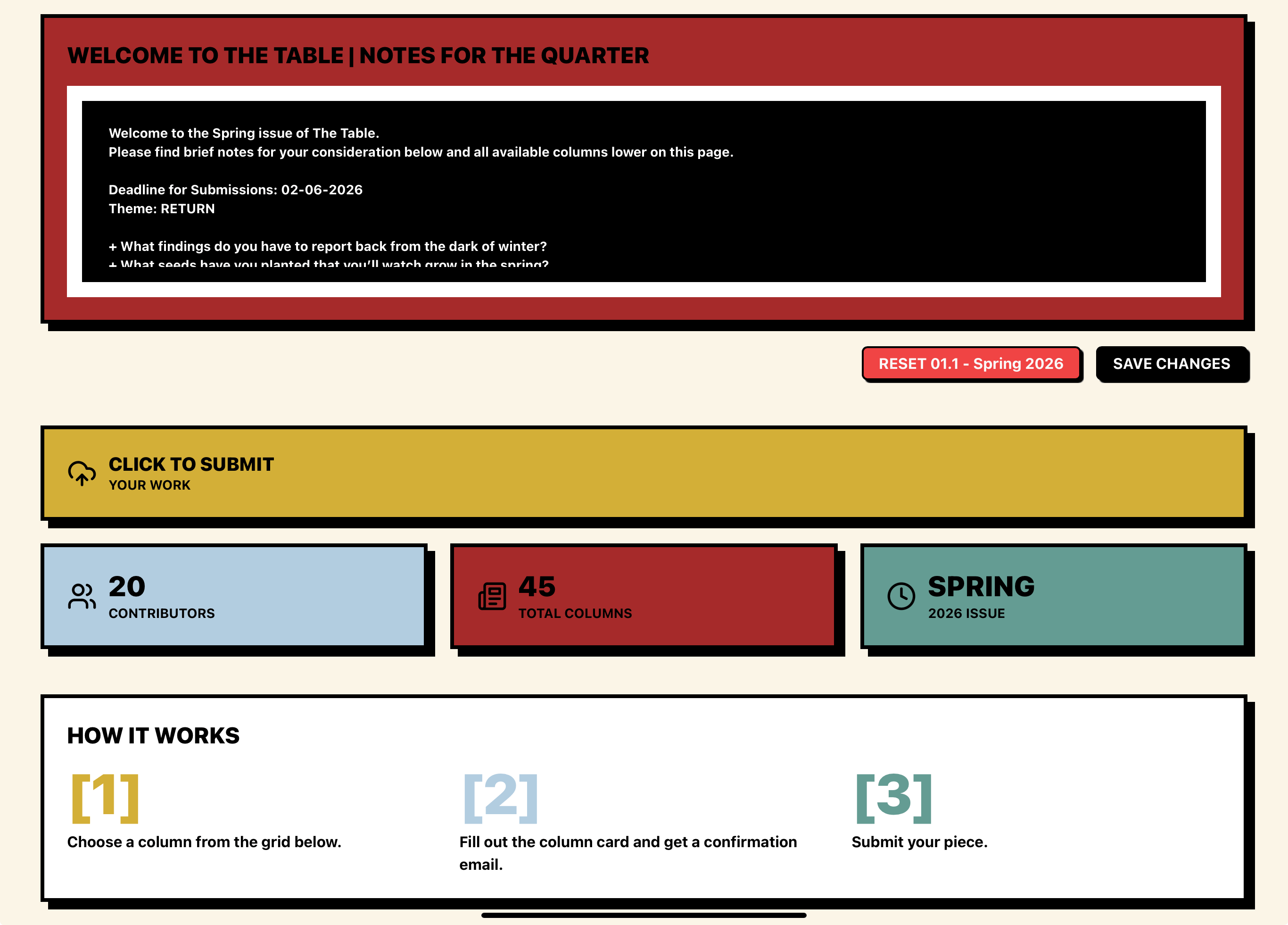
Then I started thinking about how to track and manage submissions — so I built a dashboard, sent out my first Contributor Blast, and said a little prayer people would want in.
Building It Out
To my surprise, 14 people reached out and wanted to get involved in this thing that did not yet exist. As submissions came in from my friends, I laughed, smiled, and literally cried in my living room one day because of how beautiful it all was.
I still can’t believe how lucky I am that I get to do this and that people gave me their blind, full-hearted trust. I doubt that feeling will ever go away.
In any case, when the deadline was up and submissions were in my care, the really hard part came along: making it into a thing that did now exist — and looked as good as all the work that would be held by it.
Fortunately for me — and proof that I did something right in a past life — Jordan Runder (00.0 | Neighborhood) offered his hand to shine a light on the depths. He let me learn how to design while he did all the real work.
Along the way, I got invaluable insights, full creative legroom, and the ability to essentially point and describe changes as he altered each asset, showing me the how and why for next time.
We spent the following months arranging each spread and developing a visual language that turned a not-thing into a some-thing.
At the end of it all, we made something better than I thought it would be… by a lot.
The Table is Born
Opening the shipment of 60 copies was a whopper of a moment. Up against the clock and without a physical proof, there was no way of knowing if what I saw working on the computer would translate to paper. No certainty whether the silk laminate cover or 80lb paper or inner margins or perfect binding or font size or image resolution, etc. etc. etc. would translate to its final form.
Fortunately, it did.
The next day, I printed a blown-up copy of each page in my office and tacked them to the wall in the bonus room off the kitchen. I pulled the table in, laid it with a lace cloth, added silver carafes, apples, roses, seashells, and — you guessed it — The Table.
I gave a little speech, we drank a little wine, and when everyone left I laid on the floor splayed out like a starfish in total disbelief that we pulled it all off.
If that’s not a sign of a good party, I don’t know what is.


Here’s to many more.
Yes yes yes. Thank you.